Research plays a pivotal role in advancing knowledge, improving professional practice, and addressing complex health and societal challenges. In nursing and multidisciplinary fields of science, research serves as the foundation for evidence-based practice, innovation, and quality improvement. It enables professionals to generate new knowledge, validate existing practices, and develop effective solutions that enhance patient care, public health, education, and scientific progress.
Role of Research in Nursing
Nursing research is a systematic inquiry designed to develop knowledge about issues of importance to the nursing profession, including patient care, healthcare systems, disease prevention, and health promotion. Research in nursing contributes to:
1. Evidence-Based Practice (EBP)
Research provides scientific evidence that guides clinical decision-making and improves patient outcomes. Evidence-based nursing integrates the best available research findings with clinical expertise and patient preferences.
2. Improvement of Patient Care
Research helps identify effective interventions, treatment protocols, and care strategies that enhance patient safety, satisfaction, and quality of life.
3. Development of Nursing Knowledge
Through research, nurses contribute to the growth of nursing theories, models, and frameworks that strengthen professional practice and education.
4. Healthcare Policy and Management
Research findings inform healthcare policies, resource allocation, and administrative decisions, ensuring efficient and effective healthcare delivery.
5. Professional Growth
Engagement in research promotes critical thinking, analytical skills, and lifelong learning among nursing professionals.
Research in Multidisciplinary Fields of Science
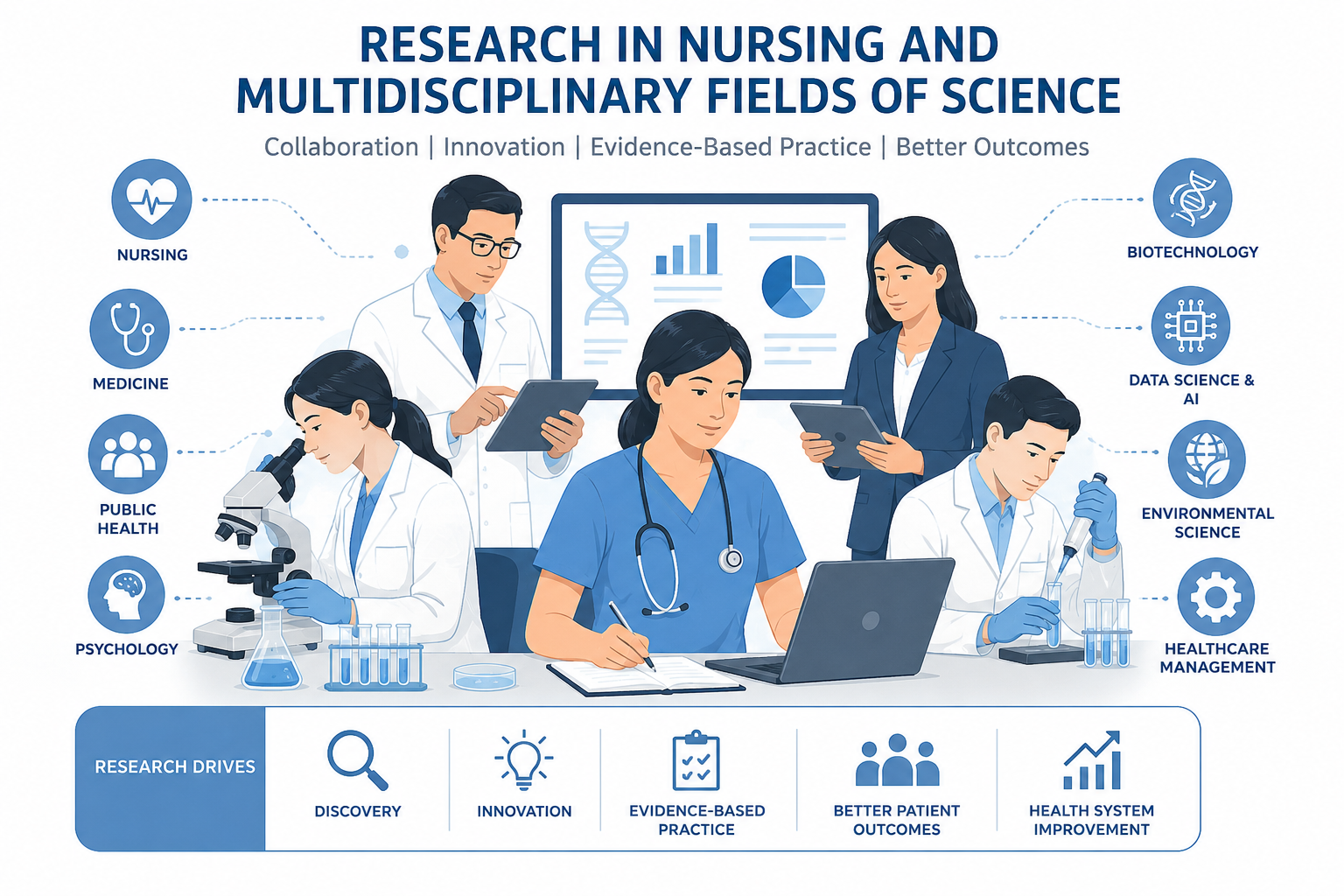
Modern scientific challenges often require collaboration across multiple disciplines. Multidisciplinary research combines knowledge, methodologies, and perspectives from different fields to address complex issues.
Key contributions include:
1. Innovation and Knowledge Integration
Collaboration among disciplines such as nursing, medicine, public health, psychology, sociology, engineering, and information technology fosters innovative solutions to healthcare and societal problems.
2. Comprehensive Problem Solving
Multidisciplinary research enables a holistic understanding of complex phenomena by integrating diverse expertise and viewpoints.
3. Advancement of Healthcare Technologies
Partnerships between healthcare professionals and technological experts contribute to the development of medical devices, digital health applications, artificial intelligence systems, and telemedicine services.
4. Public Health Improvement
Research involving epidemiologists, nurses, physicians, environmental scientists, and policymakers helps address emerging health threats, disease outbreaks, and population health concerns.
5. Sustainable Development
Multidisciplinary research supports solutions for global challenges such as climate change, environmental health, aging populations, and healthcare accessibility.
Importance of Interdisciplinary Collaboration
The growing complexity of healthcare demands collaboration among professionals from diverse scientific backgrounds. Such partnerships facilitate:
- Enhanced research quality and impact.
- Broader perspectives in addressing health issues.
- Improved translation of research findings into practice.
- Increased opportunities for innovation and funding.
- Better outcomes for individuals, communities, and healthcare systems.
Challenges in Multidisciplinary Research
Despite its advantages, multidisciplinary research may face challenges such as:
- Communication barriers among disciplines.
- Differences in research methodologies.
- Resource and funding constraints.
- Coordination and management difficulties.
- Ethical and regulatory complexities.
Addressing these challenges requires effective leadership, mutual respect, clear communication, and shared research goals.
Research is an essential component of nursing and multidisciplinary scientific fields. It drives evidence-based practice, improves patient care, promotes innovation, and addresses complex global challenges. Through collaborative efforts across disciplines, research contributes to the advancement of knowledge, enhancement of healthcare systems, and overall improvement in human well-being. As healthcare and scientific environments continue to evolve, the importance of robust, interdisciplinary research will remain fundamental to achieving sustainable and meaningful progress.